Anyone who invests in a high-quality paint protection film (PPF) or a ceramic coating usually assumes the paint is protected for years to come, worry-free. What surprises many vehicle owners: these very high-tech surfaces are surprisingly vulnerable to an everyday enemy – water spots. Water spots are among the most common, and at the same time most underestimated, forms of damage on modern vehicle surfaces. In this article, we explain how water spots actually form, why PPF and ceramic coating don't automatically prevent them, and how to recognize, prevent, and remove Type 1 and Type 2 spots.
Why PPF and Ceramic Coating Don't Protect Against Water Spots
Both paint protection film and ceramic coating create a resilient, smooth surface with excellent hydrophobic properties: water beads up, forms round droplets, and runs off the paint quickly. This is exactly what leads to a common misconception. The problem isn't caused by the water itself, but by what's left behind once it evaporates.
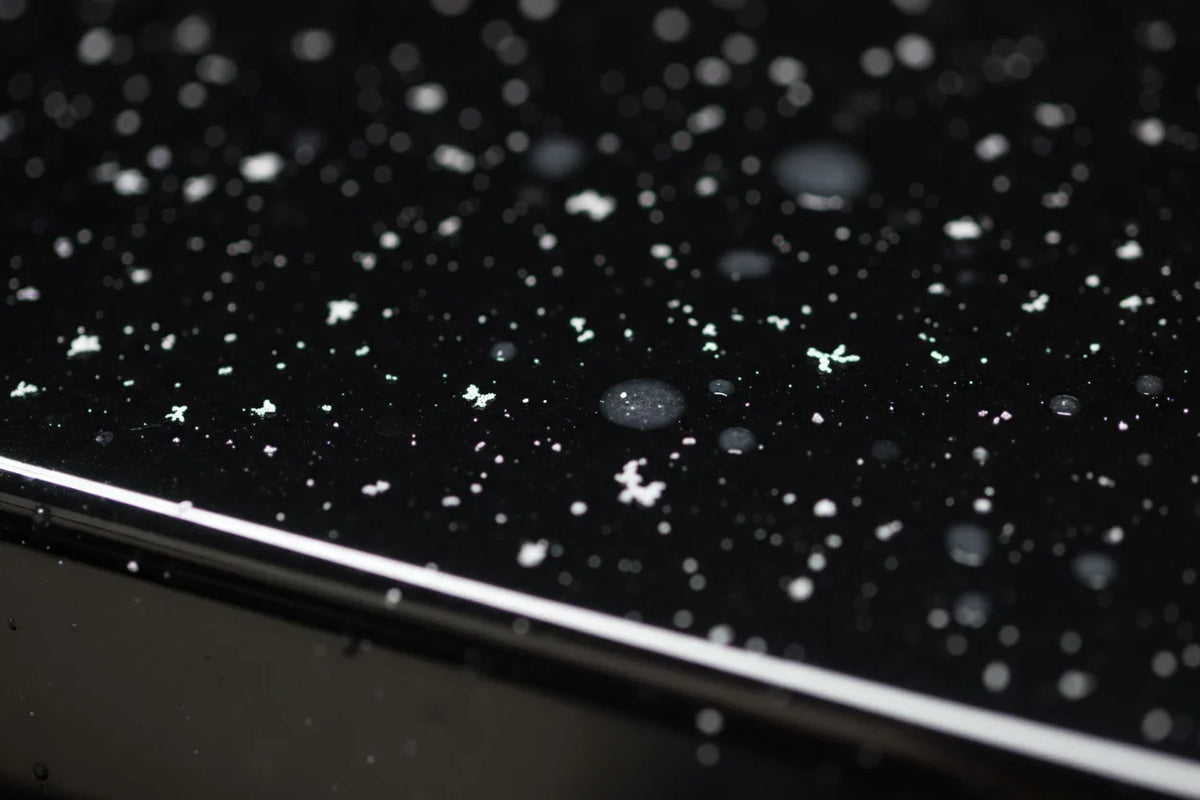
Irrigation water or water used during a car wash contains dissolved minerals – primarily calcium and magnesium salts – along with varying airborne pollutants depending on the region. When a water droplet sits on the surface and evaporates, these minerals and contaminants are left behind as residue. Because PPF and ceramic coatings are chemically very similar to the clear coat itself, they react to these residues almost as sensitively as untreated clear coat. The glass-like hardness of a ceramic coating protects against scratches and chemicals, but it does not prevent mineral residue from gradually working its way into the surface over time.
Type 1, Type 2 and Type 3: The Three Stages of Water Spots
In vehicle care, water spot damage is classified into three levels of severity. Understanding these stages is essential for acting in time.
Type 1 – surface-level spots. The mineral residue sits only on top of the surface without having reacted with the paint, coating, or film. These spots can usually be removed without a trace using a mild cleaning solution, as long as they haven't been left too long.
Type 2 – etched spots. If the residue remains on the surface longer – for example accelerated by sun exposure – a mild chemical reaction begins to etch the surface. You can already feel slight irregularities with your finger. At this stage, cleaning chemistry alone is no longer enough; a mechanical treatment, such as polishing, is also required.
Type 3 – irreversible damage. If the residue has been eating into the paint, film, or coating over an extended period, visible craters form. This damage can no longer be fixed by cleaning or polishing alone – at this point, only a full polish of the affected area, or in the worst case a repaint, will help. Solid-color paints with sensitive pigments and soft paint finishes are especially at risk.
The good news: Type 3 damage is entirely preventable. Anyone who identifies and treats Type 1 spots early stops them from ever developing into Type 2 or Type 3 damage.
Preventing Water Spots: The Most Important Step
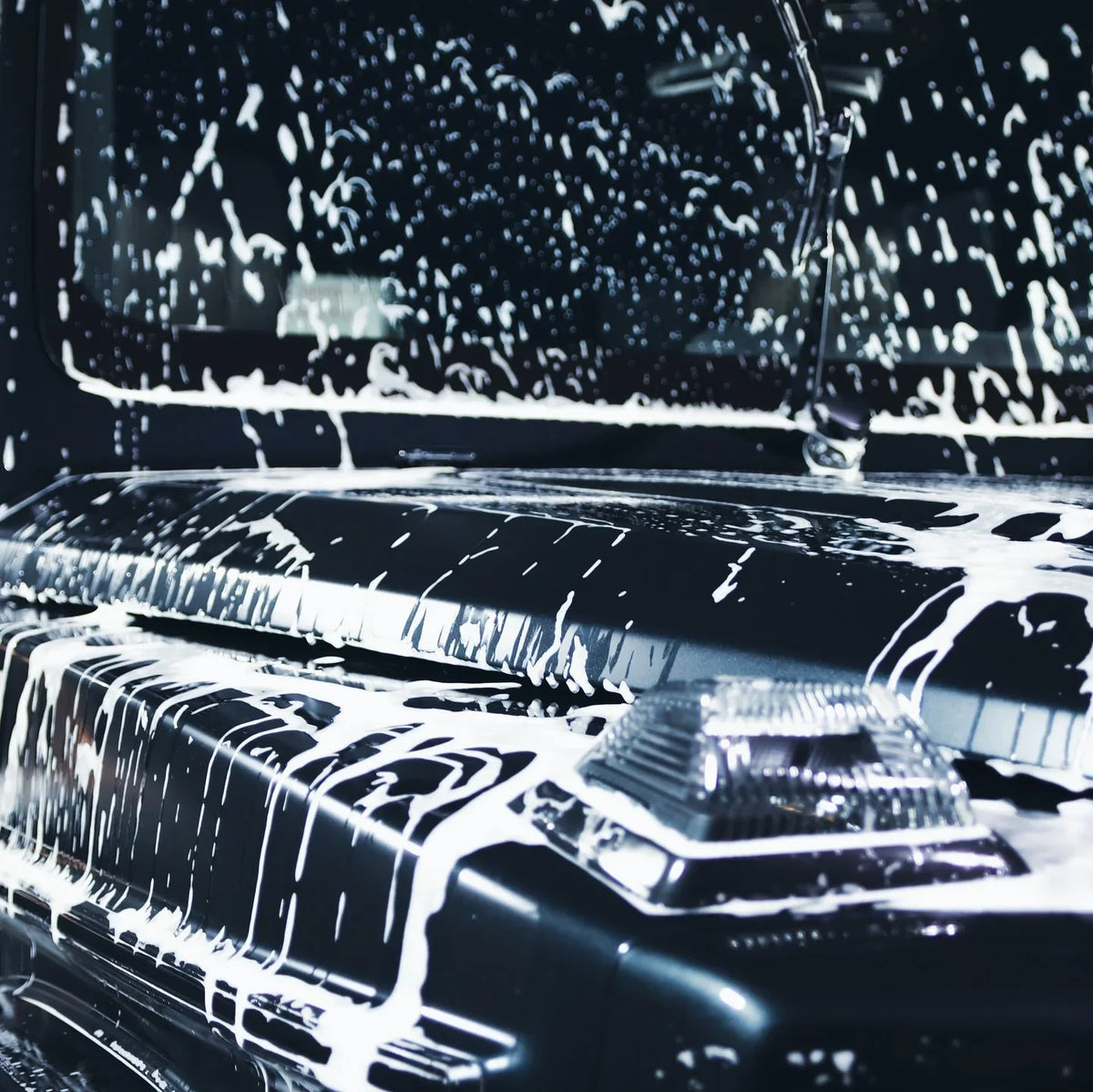
The single most effective measure against water spots is remarkably simple, yet frequently neglected in practice: water must not be allowed to dry on the surface. After every wash, rain shower, or drive through wet conditions, the vehicle should be dried promptly and thoroughly instead of letting droplets evaporate on their own. Especially on vehicles with PPF or ceramic coating, a high-quality drying towel that absorbs water rather than simply pushing it around is well worth using.
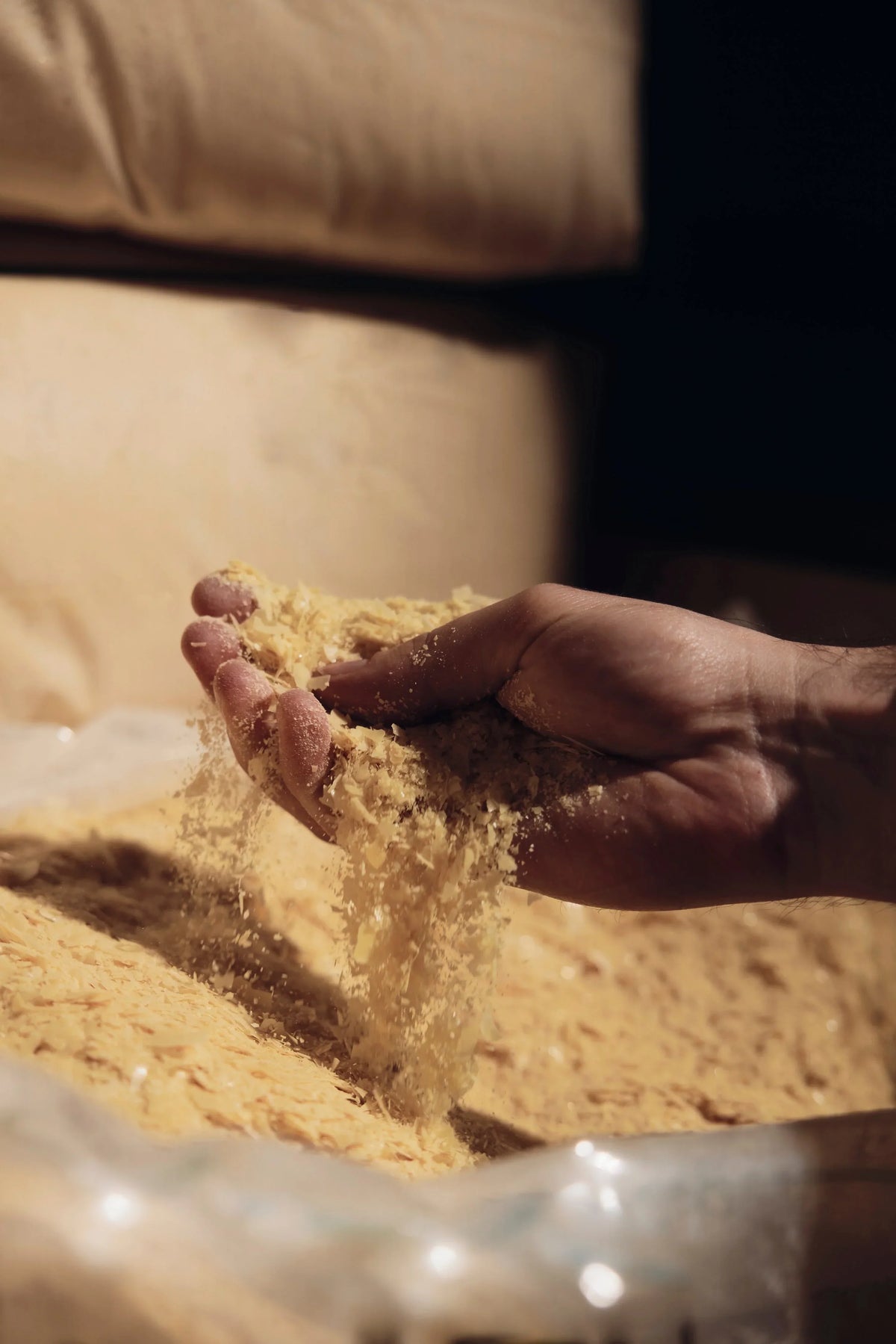
Beyond consistent drying, there's a second, often-overlooked approach: adding a wax-based topper layer. Both coating and PPF bond to the substrate through very strong, permanent bonds – which is exactly what makes them so durable, but also difficult to refresh. A carnauba wax with the right formulation lays down an additional thin, sacrificial layer on top. This layer further improves water beading and helps water droplets slide off faster, leaving behind less residue before they ever come into contact with the underlying protection layer.
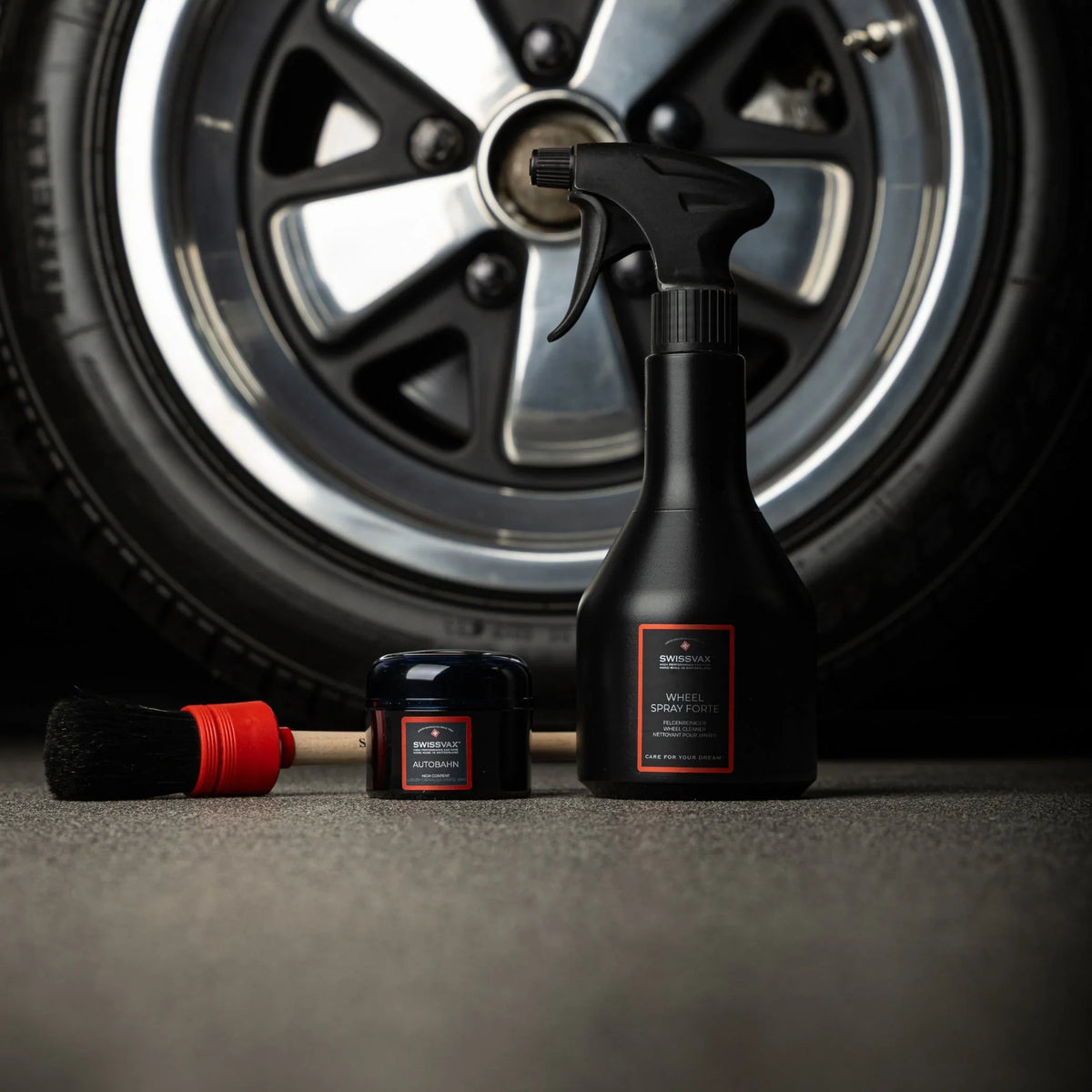
For wrapped vehicles, there's a practical all-in-one solution for this: the PPF Protection Set. It includes a carnauba wax specifically formulated for film (40% vol.), along with Cleaner Fluid Regular, Car Bath, and matching accessories – all designed to clean, care for, and additionally seal the film without compromising the self-healing properties of modern PPF. You'll find further information on proper PPF care on our PPF care page.
For ceramic-coated vehicles, an additional seal is also worthwhile, using a compatible wax from our wax collection or specifically a PTFE wax, which offers particularly strong adhesion on smooth, sealed surfaces. Important: this extra layer doesn't replace the coating or its underlying protection – it specifically reinforces it at the exact point where water spots are most likely to form.
Removing Water Spots: Treating Type 1 and Type 2 Correctly
Once a water spot has already formed, the right approach depends heavily on its severity.
For Type 1 spots, a gentle, mild hand cleaning is usually sufficient. On PPF, a mild hand polish works well here, dissolving residue without attacking the surface. On coating and clear coat, light contamination can often already be lifted with a nourishing, non-abrasive cleaning fluid.
For Type 2 spots, which have already started to affect the surface slightly, chemistry alone usually isn't enough anymore. This is where a mildly abrasive hand polish such as Cleaner Fluid Medium comes in. It removes micro-scratches, light oxidation, and early-stage water spots through fine micro-abrasives that progressively refine as they're worked in. Important: the product should be applied deliberately and sparingly, only to the affected areas – not across the entire vehicle.
For larger affected areas, or for a more even result, reaching for machine polishing is recommended. It allows for more consistent treatment of larger surfaces and is particularly useful when several areas of the vehicle are affected at once – for example after an extended period parked outdoors, or after a wash using hard tap water.
After any mechanical treatment – whether by hand or by machine – the surface should be resealed to protect it from both new water spots and other environmental influences.
Why Prevention Is Cheaper Than Correction
Comparing the three spot types makes the point clear: the earlier a water spot is identified and treated, the less effort it takes to fix. A Type 1 spot is resolved in minutes with gentle cleaning. A Type 2 spot already requires targeted polishing. A Type 3 spot often can't be fully corrected at all. That's exactly why prevention pays off: consistent drying after every water contact, regular checks of vulnerable areas such as the hood, roof, and trunk lid, and an additional wax-based seal over PPF or coating as a "sacrificial" protective layer.
Vehicles that receive regular care rarely reach an advanced stage of water spot damage. If you're unsure about the right care routine for your vehicle, your film, or your ceramic coating, take a look at our FAQ or reach out to our team directly.
This article is intended for general educational purposes on the formation and treatment of hard water spots on modern vehicle surfaces. For deeply etched or large-area damage, we recommend having an experienced detailer assess the paint before treatment.